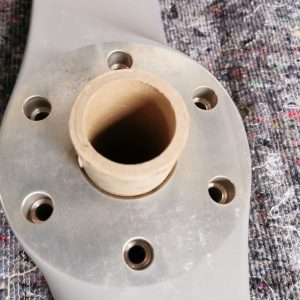
New, Never Installed offers replacement and project value for buyers seeking an unused fixed-pitch propeller with clear manufacturer identification and documented storage history.
Whether buyers search for a Sensenich Propeller P/N 74DM6-0-60, Sensenich 74DM6 Propeller, or 74DM6-0-60 Aircraft Propeller, complete identification should guide the purchase.
Whether described as a Sensenich Fixed-Pitch Propeller, Sensenich Aluminum Propeller, Fixed-Pitch Aluminum Propeller, or Aluminum Aircraft Propeller, the individual unit should receive professional inspection before installation.
The 74-Inch Aircraft Propeller, 60-Inch Pitch Propeller, Lycoming O-320 Propeller, and General Aviation Propeller keywords represent common dimensional, engine, and application searches associated with the model.
A Replacement Aircraft Propeller must match the approved aircraft, engine, hub, bolt pattern, spinner, diameter, pitch, and operating limitations.
Reviewing P/N 74DM6-0-60 Markings
Complete identification reduces unsuitable purchases and gives maintenance professionals the information required for further review.
Original packaging can support the product history but does not replace inspection of the actual propeller.
Understanding New-Old-Stock Propeller Status
The seller should disclose the purchase date, ownership history, storage environment, packaging get more info condition, and any previous trial fitting.
New, Never Installed.
How a Fixed-Pitch Aluminum Propeller Operates
A propeller suitable for one aircraft equipped with a Lycoming O-320 may not be appropriate for another aircraft using a different engine variant or airframe configuration.
Diameter influences ground clearance, tip speed, aerodynamic load, and airframe compatibility.
Protecting Aluminum Propeller Surfaces
Professional inspection helps preserve the long-term value of the Sensenich Aluminum Propeller.
Identification markings should remain legible and protected during handling.
Measuring the 74DM6 Propeller
Any authorized diameter reduction should appear in the propeller markings and maintenance records.
Professional measurement supports the responsible use of the 74-Inch Aircraft Propeller.
Comparing Pitch Between Both Blades
The 60-inch pitch designation is an important specification that should be verified through model markings, suitable technical data, and professional measurement when required.
A blade-to-blade pitch difference can contribute to vibration, reduced efficiency, and unequal aerodynamic loading.
Matching the Propeller to the Correct Engine
The Lycoming O-320 engine family includes different models, power ratings, flange configurations, operating limits, and aircraft applications.
The mounting flange, pilot fit, bolt pattern, spacer arrangement, and spinner components should also match the receiving installation.
Inspecting the Complete Propeller Assembly
Blade comparison should include the faces, backs, roots, leading edges, trailing edges, tips, and hub transitions.
Unexplained grinding, drilling, filing, material removal, or attached weights should receive professional review.
Preparing the Replacement Aircraft Propeller
A genuinely never-installed propeller should not show unexplained fretting, bolt loading, or flange-contact patterns.
Fasteners should not be selected solely by visual appearance, basic diameter, or thread size.
Evaluating Scratches, Dents, and Finish Damage
Professional evaluation protects the Sensenich Aircraft Propeller from unsuitable installation.
Trailing edges and blade tips should remain free from bending, cracking, deformation, edge damage, and inconsistent contour.
Corrosion Inspection and Storage History
Aluminum propellers can develop corrosion after exposure to moisture, condensation, coastal air, chemicals, damaged coatings, or unsuitable storage materials.
Periodic inspection can identify developing coating or environmental concerns.
Supporting Installation Eligibility
Certified design status does not automatically establish the present serviceability, airworthiness, or installation eligibility of an individual propeller.
A certified-design propeller can still require inspection after prolonged storage, transportation, environmental exposure, or handling.
Reviewing Purchase and Storage Records
Conflicting or incomplete identification should be resolved before payment or installation.
Records should remain protected from alteration, moisture, loss, and separation from the propeller.
Replacement Propeller Buying Guide
Detailed review reduces unsuitable purchases and unexpected inspection costs.
- Confirm P/N 74DM6-0-60, the complete serial number, manufacturer markings, 74-inch diameter, 60-inch pitch, blade count, hub dimensions, bolt pattern, and original configuration.
- Do not treat original packaging, clean paint, new wording, or never-installed status as proof of present serviceability.
- Inspect and photograph the propeller immediately after delivery before cleaning, measuring, balancing, repairing, mounting, or modifying it.
Preventing Transportation Damage
The propeller should be packaged in a rigid crate or container that supports the hub and protects both blades from bending, impact, abrasion, and uncontrolled movement.
The propeller should remain immobilized throughout transport.
Protecting the Propeller Before Installation
Protective materials should prevent contamination without trapping moisture.
Organized storage supports the commercial value of the General Aviation Propeller.
Mounting the Replacement Aircraft Propeller
The technician should verify the complete model, serial number, diameter, pitch, hub, flange, bolt pattern, spacer arrangement, mounting hardware, torque procedure, and installation eligibility.
Blade tracking should be evaluated after mounting.
Authorized personnel should complete all required maintenance records and return-to-service actions.
Caring for the Fixed-Pitch Aluminum Propeller
Consistent maintenance protects the Sensenich Fixed-Pitch Propeller.
Maintenance records should identify inspection findings, measurements, corrective action, parts, dates, and personnel involved.
Commercial Value of a New Sensenich Propeller
The commercial value of a new Sensenich propeller depends on exact identification, serial number, manufacturing date, storage history, dimensional conformity, factory finish, inspection status, traceability, and included accessories.
The lowest advertised price may not represent the lowest installed cost when hardware, records, or compatibility information are incomplete.
Final Thoughts on the Sensenich 74DM6 Propeller
For a properly approved aircraft-and-engine combination, the propeller can support a professional installation project when inspected and mounted by qualified personnel.
Careful technical and commercial review can reduce compatibility problems, missing-hardware expenses, storage-related concerns, installation delays, inspection costs, and documentation issues.
Whether the product is described as a 74-Inch Aircraft Propeller, 60-Inch Pitch Propeller, Lycoming O-320 Propeller, or General Aviation Propeller, aircraft-specific applicability remains essential.
With responsible purchasing, dimensional verification, corrosion and damage inspection, correct hardware, tracking, and balance evaluation, the component can remain a valuable aviation asset.